




Polaris Gold Quartzite: Embedding the Light of the North Star into Stone
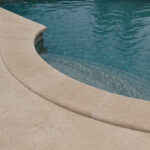
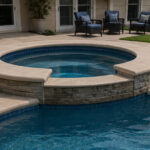
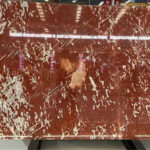
The Polaris Gold Quartzite mine is located on the eastern edge of the Goiás Plateau in Brazil, in an ancient orogenic belt at an altitude of 900 meters. Deep-sea silica deposits 540 million years ago recrystallized under high pressure of 2.3 GPa and temperatures of 650°C, forming dense quartzite. Later, hydrothermal fluids introduced rutile, hematite, and microcrystalline quartz, ultimately creating a tri-color symphony of “champagne gold, ivory white, and nebula gray.” Locals call it “Estrela do Norte” (North Star Stone), while exporters have designated it Polaris Gold—a reference to the North Star’s enduring brilliance and its iconic status in high-end stone catalogs. The mining area is narrow, with individual veins less than 35 meters wide. This results in highly consistent grain patterns across each block, creating a natural environment for extensive grain tracking. Polaris Gold features a warm champagne gold base, interspersed with ivory white and nebula gray flocculent patterns. The rutile crystals create a fine metallic shimmer under the light, resembling the flickering stardust in the night sky. As the angle of the light source changes, the champagne gold “floats” forward while the nebula gray recedes, creating a three-dimensional depth of field. The translucent crystals, backlit, create a milky halo, giving even the 20mm thick panels the appearance of “floating.” This “warm gold + cool gray” color scheme complements modern minimalist black, white, and gray, while also complementing walnut, brass, and smoked leather, making it a versatile harmonizer in any space. Laboratory data shows a Mohs hardness of 7, a density of 2.69 g/cm³, a water absorption rate of 0.17%, a compressive strength of 138 MPa, and a flexural strength of 13 MPa. A 20 mm thick plate can be cantilevered 900 mm without sagging. It is also acid-resistant, alkali-resistant, and salt spray-resistant, and will not discolor for 30 years in coastal curtain walls. Its dry coefficient of friction of 0.65 and wet coefficient of friction of 0.48 enable the flamed surface to easily achieve R11 slip resistance, making it suitable for pool decks and bathroom floors.

Polaris Gold Quartzite Cutting Process
Early in the morning in Verona, Italy, the first 20-ton block of Polaris Gold was slowly pushed onto the rails of a BM saw. The saw teeth sliced into the rock like silver threads, and in a single stroke, 80 mirror-smooth rough plates were cut. The thickness error was controlled to within plus or minus one millimeter, ensuring millimeter-level precision for subsequent seamless splicing. Next, thin sheets less than 18mm thick are transported to the cleanroom, where a 2mm fiberglass mesh is discreetly sandwiched between the two sheets. This nearly invisible “bones” imbues the previously hard quartzite with a flexible soul, allowing it to bend gracefully within a radius of 1.2 meters, creating the potential for curved staircases or column cladding. Leaving the laminating line, they undergo a feast of surface treatments: polishing wheels sweep across at 2,000 revolutions per minute, creating a 90-degree mirror finish that instantly brings out the textures of champagne gold and nebula gray. A flame gun instantly melts the rough grain into finely detailed grooves, achieving an R11 anti-slip rating that repels both rain and high heels. A gentle touch of a leather brush leaves a soft matte finish, quietly removing fingerprints in less than a second. When designers desire a ray of light to emanate from the stone, 12mm slabs are fed into a vacuum injection machine, where transparent resin penetrates every micro-crack. The 18% transmittance creates a backlight that, when illuminated, creates the illusion of an entire galaxy locked within the wall. For more intricate patterns, a high-pressure water jet sweeps across at 300 meters per second, dancing with Carrara white and brass strips. Sharp cuts of 0.2mm sculpt constellations, ocean waves, and city skylines, transforming quartzite into a future we can hold in our hands.

Some Polaris Gold Quartzite Case Studies
As the first rays of morning light filter through the mist of Chengdu’s Luhu Lake, a 4.8-meter-long Polaris Gold island emerges in the center of the open kitchen. The 20mm-thick quartzite countertop, laid in a parallel grain, features amber gold and nebula gray patterns resembling a stretched sand dune, stretching from the front of the island to the back, encircling the cooking area 270 degrees, allowing the sizzling sound of omelets and the aroma of coffee to swirl within the same “landscape painting.” At night, the 3000K LED strip embedded in the back panel illuminates, its champagne gold reflected by the quartz crystals, resembling the glow of a fireplace. The clinking of spatulas and the laughter of children become the soundtrack to this long scroll. 1000 days after moving in, the countertop remains scratch-free and color-bleed-free, as if time has paused. 1800 kilometers north, a Beijing duplex staircase greets every homecoming with 900×300×30mm flamed treads. The texture of the facade and risers flows seamlessly, the gradient from gold to gray undulating like waves, guided by the tread light strips. When a child runs barefoot, the delicate friction of their soles against the rough, flamed grain creates a steady, almost level surface, as if the staircase were a flattened sand dune. 1,200 kilometers further south, in the master bathroom of a private residence in Shenzhen Bay, the leather surface of the 2.6-meter double basin is soft under fingertips and fingerprint-resistant. Its 15-millimeter thickness allows the nebula texture to extend infinitely through the reflection of the mirror-backed light strip. Morning washing feels like a stroll through the stars. As water droplets roll down, amber-gold and gray-blue light and shadow briefly intersect on the water’s surface before dissipating.


Il battito della città inizia a accelerare. La Chengdu SKP Beauty Gallery utilizza 1.500 metri quadrati di lastre fiammate da 600×600×15 mm per creare una nebulosa fluida. La superficie antiscivolo della R11 rimane solida come la roccia nonostante un traffico pedonale quotidiano di 60.000 persone, con una perdita di lucidità inferiore a 2 GU dopo sei mesi di utilizzo. La striscia luminosa passa gradualmente dall'oro al grigio-blu man mano che il traffico aumenta, simile a un fiume colorato dal battito cardiaco della città. Il ritmo dei tacchi alti e le venature ondulate del quarzo si intrecciano per formare una sinfonia moderna. L'atrio dell'ascensore presso lo Shanghai Qiantan Enterprise World presenta pareti e pavimenti integrati, realizzati con pannelli lucidi da 20 mm disposti verticalmente e sostenuti da un supporto in alluminio a nido d'ape. I pannelli murali, pesanti 1,4 tonnellate, possono essere sostituiti in un'unica operazione entro due ore. Gli stipiti delle porte presentano la stessa venatura dei pannelli. Nel momento in cui la porta si apre, il contrasto fresco e caldo tra metallo e pietra si scontra nell'angolo a 90°, creando una ’frattura nel tempo e nello spazio“, quasi fosse l'ascensore un portale verso un'altra era geologica. La parete a tenda pieghevole da 150 metri quadrati del Museo del Futuro di Dubai impiega 53 grandi pannelli spessi 30 mm, fissati a secco e collegati secondo un motivo a ”duna di sabbia dorata“. La superficie pieghevole a 22° proietta una fascia di luce opalescente larga 6 cm alle 10 del mattino, e ogni variazione dell'angolo tra la luce solare e la pietra crea un'ombra fluida della duna sui pannelli in alluminio, generando un momento straordinario nel video promozionale ufficiale. Quando il treno entra nella stazione tematica della Linea 8 della metropolitana di Qingdao, una parete lunga 250 metri è rivestita con pannelli traslucidi da 18 mm e strisce luminose RGBW. Il motivo a nebulosa riflette il logo della metropolitana, e l'illuminazione passa gradualmente dall'oro al grigio-blu, regalando la sensazione di essere trasportati in un tunnel interstellare. Il rombo del treno si sovrappone alla pulsazione delle venature di quarzo. Intanto, nel Parco Binhai di Shenzhen, tre lastre di pietra grezza da 6 tonnellate sono impilate con un angolo di 30 gradi. La combinazione di superfici fiammate e naturali, illuminate da luci LED di notte, crea una duna di sabbia fluttuante, intrecciata con texture dorate e grigie, acqua marina e cemento. Il suono della marea e le ombre della luce increspano la superficie della scultura, instaurando un dialogo tra la terra e il mare. Polaris Gold, con 540 milioni di anni di sedimentazione, incide silenziosamente nella vita quotidiana la permanenza delle stelle, il fermento della città e la romanticità dell'arte pubblica.

