




Italian Grigio Argentato Marble: Timeless Elegance in Gray Tones of Light and Shadow
I. Grigio Argentato Marble Stone Origin: A Gift from the Alpine Footprints
Grigio Argentato Marble, often translated into Chinese as “Silver-Gray Travertine” or “Italian Silver-Gray Marble,” originates from the Alpine footprints at the junction of the Veneto region and Trentino-Alto Adige in northern Italy. The quarry is located at an altitude of approximately 800-1100 meters, and the rock mass was formed in a shallow marine sedimentary environment during the Jurassic period, approximately 190 million years ago. During the closure of the ancient Tethys Ocean, calcium carbonate-rich mortar underwent high-pressure and low-temperature metamorphosis, forming the dense and fine marbleized limestone we see today. Due to the inclusion of small amounts of dolomite and trace metallic minerals within the mineral layer, the stone surface exhibits a unique silver-gray base color and silky white or light silver veins, reminiscent of the eternal scratches left on the rock by a glacier. The history of local mining in Italy dates back to the 16th century during the Venetian Republic. It was first used for floor mosaics in church porticoes and aristocratic residences. Today, it is still mined in an orderly “stage-by-stage” pattern on the same mountain, ensuring the integrity of the rough material while minimizing ecological disturbance. II. Petrographic Characteristics: Aesthetic Logic in Data


Grigio Argentato Marble is a medium- to fine-grained calcite marble. Its main physical properties are as follows:
- Bulk density: 2.71 g/cm³
- Water absorption: 0.18% (far below the European EN marble standard’s outdoor upper limit of 0.40%)
- Shore hardness: 52 HSD
- Compressive strength: 135 MPa
- Flexural strength: 12 MPa
- Abrasion resistance: 0.32 g/cm² (Taber abrasion test)
- Radioactivity: IRa=0.1, Ir=0.2, classifying it as a Class A green building material
Petrographic microscopy reveals calcite grains ranging from 0.1 to 0.4 mm in size, with tightly bounded grains. Small amounts of dolomite are scattered throughout, giving the stone increased resistance to acid rain. It is these microstructures that allow Grigio Argentato Marble to achieve a silky luster while withstanding prolonged outdoor exposure without fading or discoloring.
III. Grigio Argentato Marble Color and Texture: A Versatile Gray-Tone Architectural Base
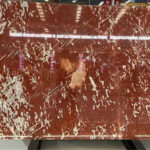
Unlike the flamboyant, traditional Italian Carrara white or Iranian travertine, Grigio Argentato’s silvery-gray base is quiet and subdued, with three primary texture types:
- Linear Silver Thread: White calcite veins 0.5-2 mm wide, distributed at an angle of 15-30 degrees, are ideal for tiling large panels to create a dynamic, “rippling” effect.
- Cloudy Globular: A light- to medium-gray, clumpy texture with soft edges. Ideal for flooring after a flamed or litchi finish, minimizing footprints and dust.
- Crystalline Sparkle: The shimmer of mica or quartz particles is visible under specific lighting angles, adding subtle depth to matte or antique finishes. This color scheme perfectly balances cool and warm materials: it looks luxurious when paired with black stainless steel, intimate when combined with warm wood finishes, and naturally tranquil when juxtaposed with greenery and water features.

IV. Grigio Argentato Marble Craftsmanship: A Variety of Skills from Rough to Exquisite
Italian stonemasons describe the crafting of Grigio Argentato Marble as “three polishings and three firings”:
- Polished: Glossiness can reach over 90°, with fine grain and low glare. Suitable for spaces requiring light reflection, such as hotel lobbies and elevators.
- Matte: Glossiness of 25°-30°, a silky feel, and an R10 anti-slip rating. Suitable for indoor floors and integrated bathroom walls and floors.
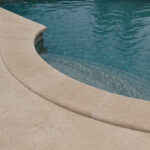
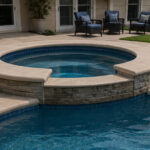
- Flamed: Surface roughness Ra 40-60 μm, an R11 anti-slip rating, and excellent weather resistance. Widely used in exterior plazas, landscape water features, and pool surrounds. • Bush-hammered: Its uniform, dimpled texture is non-slip and resistant to staining, making it a top choice for high-traffic areas like airports and train stations.
- Anticato: Flamed and then lightly brushed, it evokes the age-old traces of a century-old castle and is a popular choice for European and American villa exteriors.
- Waterjet Parquet: Using a CNC water jet, silver-gray slabs are combined with white or black marble, enabling 0.2 mm sharp angles to be cut, creating complex logos or artistic parquetry.
Furthermore, this stone offers a uniform texture and low cracking, with a rough material yield of up to 38 m²/ton. Large-format 2.2 m x 3.0 m thin slabs (12 mm) can be directly used in prefabricated wall panels after backing mesh lamination, enabling quick installation. V. Application Scenarios: A Spatial Narrative Across Millennia
- Hotels and Clubs
The lobby on the 14th basement floor of the Shanghai Sheshan InterContinental Hotel (Shenkeng Hotel) is paved with 600×1200 mm matte Grigio Argentato Marble, creating a “man-made-natural” dialogue with the deep pit rock face. The walls are dry-hung with the same stone using 1 mm slots, with light strips hidden within the cracks, creating a tranquil “moonlight on the rock face” effect.
- Grigio Argentato Marble Commercial Complexes
Shenzhen MixC Phase II utilizes 25 mm thick flamed slabs for the exterior street flooring, totaling over 8,000 m². The gray base contrasts with the colorful shop signs and greenery, creating a stylish and dirt-resistant look.
- Grigio Argentato Marble High-End Residences
In the Hangzhou Greentown Fengqi Chaoming Villa model apartment, the bathroom features large-format 1200×2400×12 mm thin slabs for the walls and floor, creating a continuous, seamless texture. Combined with copper faucets and white sanitary ware, the bathroom exudes Italian minimalism. 4. Cultural Architecture
The pedestrian corridor in Milan’s CityLife business district features a collage of 600×600 mm antique-style tiles, with vertical and horizontal seams. This creates a material contrast with the surrounding streamlined buildings designed by Zaha Hadid, highlighting the interweaving of history and the future.
- Grigio Argentato Marble Landscape Installations
The entrance plaza of the “Harry Potter” theme area at Universal Beijing Resort features a 300×600 mm litchi-faced wavy pattern, trimmed with stainless steel strips. This flooring accommodates an average of 50,000 daily visitors while seamlessly integrating into the theme of the magical neighborhood.


VI. Grigio Argentato Marble Case Study: Technical Details and Implementation Logic
Take Shenzhen MixC Phase II as an example. The project is located in a subtropical marine climate with an average annual rainfall of 1,900 mm and frequent typhoons. The design team initially selected light-colored granite, but due to the large color difference and coarse texture, they ultimately settled on Grigio Argentato Marble. Key features are as follows:
- Slip resistance: The surface was flamed and then brushed twice. The wet pendulum method measured a BPN of 65, exceeding the national standard of 45. • Stain Resistance: Six-sided oil protection + water-based surface enhancement: No bleeding of coffee, cola, or soy sauce for 12 hours.
- Drainage: 3% bidirectional slope leveling + 10 mm wide stainless steel linear drain; rainstorm test at 30 mm/h with no water accumulation.
- Thermal Comfort: Measured summer surface temperature is 8°C lower than dark granite, reducing the heat island effect.
During the construction phase, the stone was prefabricated at the Carrara processing base in Italy and shipped to Shenzhen Shekou Port. On-site “block pre-layout + QR code traceability” was implemented to achieve zero rework.
VII. Grigio Argentato Marble Maintenance and Sustainability: Keeping Elegance Lasting
- Daily Cleaning: Use a neutral pH detergent and a soft brush; avoid chlorine bleach.
- Periodic Maintenance: Apply a fluorosilicone protective coat every two years to outdoor burnished surfaces and every five years to interior matte surfaces. 3. Damage Repair: Microcracks are repaired with low-viscosity epoxy grouting, and broken slabs are spliced with stainless steel pins and a stone-specific structural adhesive, restoring over 80% of their flexural strength.
- Sustainable Mining: The mine is ISO 14001 certified, waste rock is used as roadbed filler, sludge is processed and filtered for brickmaking, and the water recycling system achieves 95% water reuse. The Italian Stone Association (Marmomacc) has designated it a “Green Mine” demonstration variety.
VIII. Grigio Argentato Marble Market Outlook: The Next Step for Gray-Tone Stone
With modern architecture trending toward “low saturation and high texture,” global demand for Grigio Argentato marble is increasing at a 7% annual rate. China has become the largest importer. In 2024, the landed price for rough blocks will be approximately US$480/m³, and processed slabs (18 mm polished) will be US$110-130/m², making them only 60% of the price of high-end white marble. Its excellent workability and neutral color palette hold immense potential for applications in emerging sectors such as prefabricated curtain walls, thin-panel composites, and home rock panels. Over the next decade, from London’s Thames Riverside Apartments to Chengdu’s Future Science and Technology City, Grigio Argentato marble will continue to embody the architectural narrative of “timeless elegance” with its modest yet resolute gray tones.