


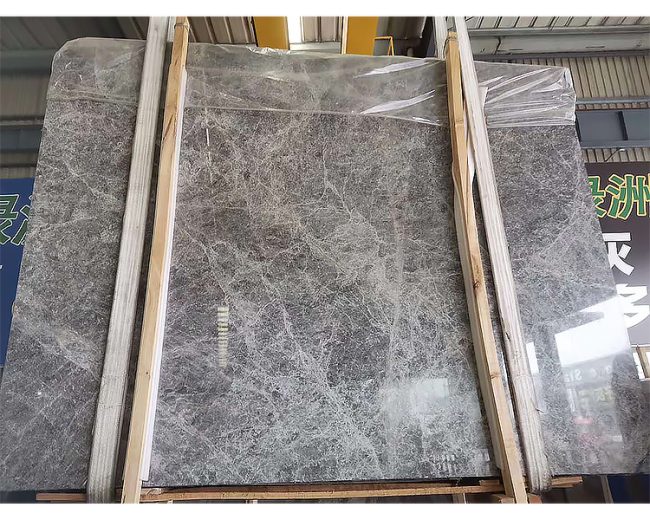

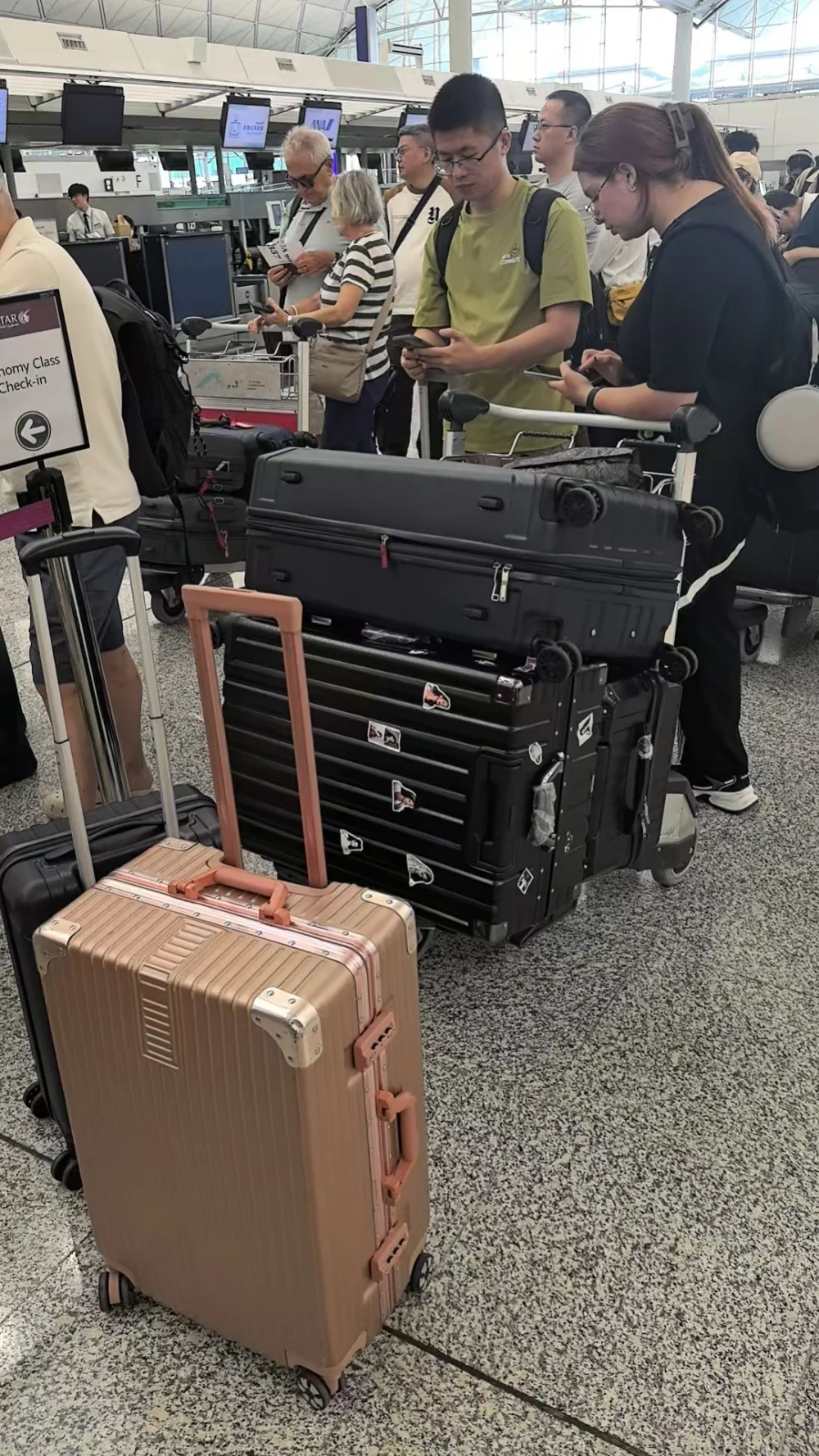
Recently, a CENTURY STAR business delegation led by the company’s General Manager travelled to the Middle East for a series of face-to-face meetings with clients, project partners, local suppliers, and other stakeholders connected with construction and stone projects in the region.
Riepilogo rapido
Riepilogo rapido: CENTURY STAR’s General Manager, Moroccan project manager, and senior international trade specialist recently visited the Middle East to meet existing and potential clients, discuss stone and construction projects, connect with local suppliers, and explore new opportunities for project-based cooperation. The visit reflects CENTURY STAR’s continued focus on closer communication, local market understanding, and practical support for international stone projects.
CENTURY STAR Takes Project Cooperation Directly to the Middle East
For international stone projects, successful cooperation often depends on far more than selecting a material and agreeing on a price. Architects, developers, contractors, procurement teams, stone suppliers, fabricators, and logistics partners may all be involved before a project reaches installation.
For this reason, CENTURY STAR sees direct communication in the target market as an important part of international project development.
During this Middle East business visit, the CENTURY STAR team met with customers and project-related partners to discuss current requirements, potential projects, material sourcing, fabrication possibilities, project coordination, and future cooperation.
The objective was not simply to introduce products. More importantly, the team wanted to understand how local projects are actually planned, purchased, coordinated, and delivered, and where a China-based stone supplier can provide more effective support.
CENTURY STAR currently works across natural and engineered stone categories including marble, granite, quartzite, travertine, limestone, quartz, sintered stone, and other architectural materials. Its wider project service model includes material selection, fabrication, technical coordination, CAD support, quality control, and international delivery. More information about the company and its project capabilities is available on the CENTURY STAR About Us page.
Face-to-Face Client Meetings Remain Important for Complex Stone Projects
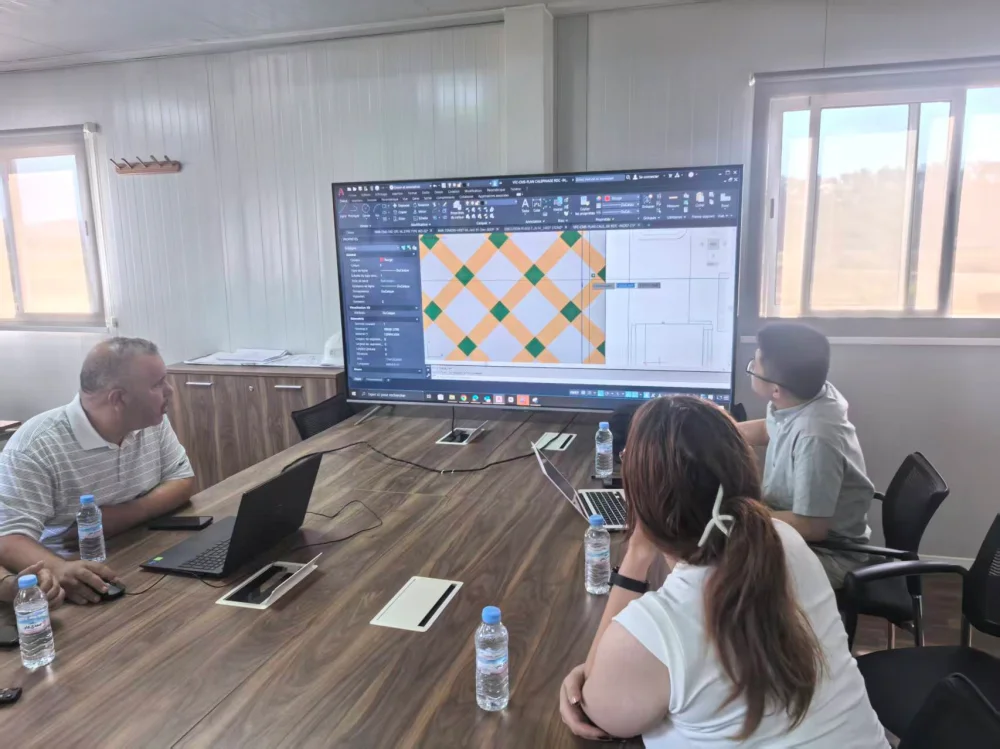
Digital communication has made international sourcing faster, but many decisions in architectural stone projects still benefit from direct discussion.
A drawing can show dimensions. A quotation can show cost. A material photograph can show colour and veining. However, these individual pieces of information do not always explain the full project situation.
During client meetings in the Middle East, the CENTURY STAR delegation focused on understanding the broader commercial and technical context behind project requirements.
Discussions included subjects such as intended applications, preferred materials, visual expectations, fabrication requirements, construction schedules, purchasing procedures, logistics considerations, and the way different parties participate in the approval process.
These conversations are particularly valuable for projects involving hotels, villas, residences, commercial interiors, public spaces, landscaping, and other applications where stone may appear in several different areas of the same development.
Instead of treating each request as an isolated product enquiry, CENTURY STAR aims to understand how the stone package fits into the overall construction programme.
A Multidisciplinary Team for International Project Discussions
The composition of the visiting team reflected the different types of decisions that commonly arise during international project cooperation.
The General Manager participated in strategic discussions relating to cooperation direction, company capability, long-term partnerships, and potential project development.
CENTURY STAR’s Moroccan project manager contributed a project-focused international perspective, helping discussions remain connected to practical coordination between different markets, project teams, and business cultures.
The senior international trade specialist focused on the commercial and operational side of cooperation, including product requirements, quotations, order coordination, documentation, production follow-up, and export communication.
By bringing these roles together, CENTURY STAR was able to discuss projects from several angles rather than limiting meetings to conventional sales presentations.
Key Areas Discussed During the Middle East Visit
| Visit Focus | Main Discussion Areas | Valore del progetto |
| Existing Client Visits | Current requirements, cooperation experience, upcoming needs, and service improvement | Strengthen communication and support long-term cooperation |
| Potential Project Meetings | Material selection, fabrication scope, technical requirements, schedules, and procurement planning | Understand project requirements before quotation and production |
| Local Supplier Communication | Regional resources, complementary supply capabilities, market conditions, and possible cooperation | Improve flexibility and regional supply-chain understanding |
| Engineering and Construction Discussions | Applications, drawings, specifications, installation interfaces, timing, and project coordination | Connect stone supply more closely with actual project execution |
| Business Development | Future cooperation models, regional demand, and long-term partnership opportunities | Build sustainable business relationships rather than one-off transactions |
Connecting With Local Suppliers and Project Resources
Another important purpose of the trip was to strengthen CENTURY STAR’s understanding of the local supply and project environment.
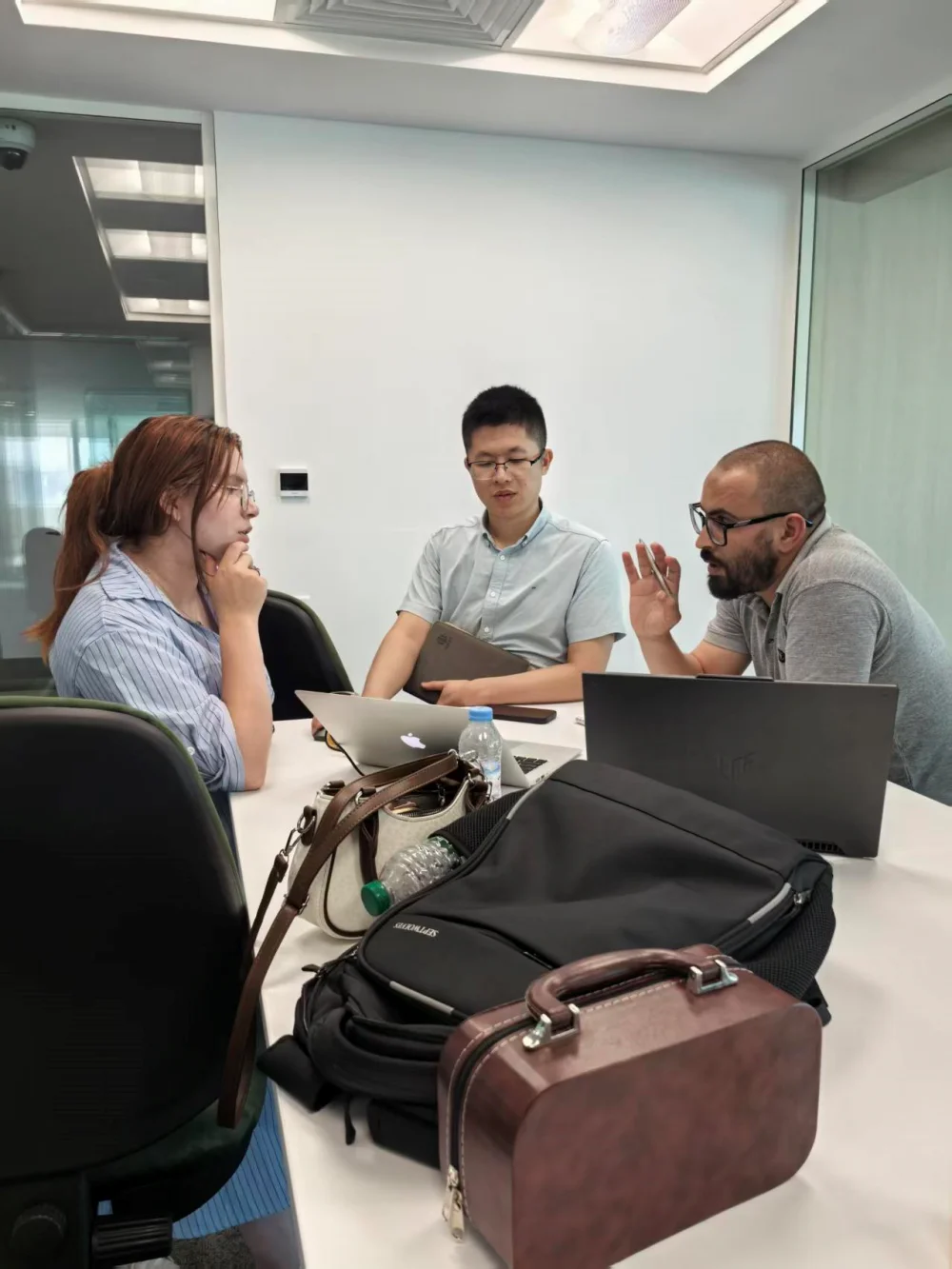
International stone projects do not operate through factories alone. A successful delivery may involve designers, contractors, local stone companies, installation teams, logistics providers, material suppliers, and project management teams working across different stages.
Meeting local suppliers and other industry participants allows CENTURY STAR to better understand available resources, regional working practices, project expectations, and areas where cooperation between Chinese manufacturing capabilities and local resources may create greater efficiency.
This does not mean replacing local suppliers or local expertise. On the contrary, CENTURY STAR sees local knowledge as an important part of successful international project delivery.
By understanding the capabilities of different parties, the company can identify where its own strengths in material sourcing, stone fabrication, custom processing, quality inspection, drawing coordination, and export logistics can complement the work already being carried out locally.
From Stone Supply to Project-Based Stone Solutions
The Middle East visit also reflects a broader development in CENTURY STAR’s international business strategy: moving from individual stone supply toward more integrated project support.
For a straightforward order, a buyer may only need slabs or tiles. For a larger architectural project, the requirements can be considerably more complex.
A single project may involve lobby flooring, wall cladding, bathroom stone, vanity tops, kitchen countertops, staircases, exterior paving, pool coping, decorative stone, mosaics, waterjet elements, furniture, and custom-shaped components.
These applications may require different materials, thicknesses, surface finishes, edge details, fabrication methods, packing systems, and installation references.
When project information is discussed earlier, the supplier can review not only what material is required but also how it should be processed, identified, inspected, packed, and coordinated for delivery.
This project-oriented approach is already reflected in CENTURY STAR’s international project portfolio, which includes residential, hospitality, commercial, landscape, and other stone applications.
Understanding Middle East Project Requirements at Market Level

The Middle East remains an important region for high-end residential, hospitality, commercial, public, and mixed-use construction, where natural stone continues to play a significant role in architectural design.
At the same time, each project has its own requirements. Material preferences, construction methods, approval procedures, deadlines, budgets, and procurement structures can differ considerably between developments.
This makes market-level communication particularly useful.
Through direct meetings, CENTURY STAR can better understand what clients value when selecting an overseas stone partner and which issues should be addressed earlier in the sourcing process.
For some customers, the priority may be access to a wider range of natural stone. For others, it may be custom fabrication, consistency across large quantities, drawing coordination, visual approval, packing quality, or international logistics.
The visit therefore provided CENTURY STAR with an opportunity not only to present its capabilities, but also to listen to the requirements of the market.
Project Discussions Begin Before Production
One of the key messages CENTURY STAR brought to these meetings is that project coordination should begin before stone enters production.
Early discussion can help clarify questions such as:
- Which stone or surface material is appropriate for the intended application?
- What level of natural colour and vein variation is acceptable?
- Are slabs, tiles, cut-to-size pieces, countertops, wall panels, or custom elements required?
- Which surface finishes and edge treatments are specified?
- Does the project require CAD drawings, shop drawings, or piece numbering?
- Should slabs or finished pieces be pre-arranged for visual review?
- What inspection points should be confirmed before shipment?
- How should finished stone be packed for the planned transportation route?
- What information will the local contractor or installer need when the material reaches site?
Discussing these questions early can reduce uncertainty later in the project and help purchasing, production, and construction teams work from the same information.
Building Relationships Beyond Individual Orders
For CENTURY STAR, the value of this Middle East visit is not measured only by immediate enquiries.
International project cooperation often develops over time. A client may first request samples, then discuss a specific material, later share drawings, and eventually require coordination across an entire stone package.
The same is true for relationships with local suppliers and project partners. Understanding each party’s capabilities makes it easier to identify suitable cooperation opportunities when future projects arise.
Face-to-face meetings create space for more detailed conversations about these possibilities and help establish clearer expectations on both sides.
CENTURY STAR therefore views this visit as part of a longer process of building reliable connections in international markets rather than as a one-time sales trip.
Closer to the Market, Better Connected to the Project
CENTURY STAR is based in Shuitou, one of China’s major stone industry centres, where access to materials, fabrication resources, and specialised stone processing supports a broad range of international requirements.
However, manufacturing capability alone does not guarantee a successful overseas project.
The supplier also needs to understand what is happening at the destination: how the project is designed, how decisions are made, how materials are approved, how local contractors work, and what clients expect from communication and service.
The Middle East business visit helps connect these two sides.
On one side is CENTURY STAR’s stone sourcing, manufacturing, processing, quality-control, and export capability in China. On the other side are clients, suppliers, construction teams, and project opportunities in the local market.
Bringing the two closer together allows project discussions to become more specific, practical, and efficient.
What Comes Next for CENTURY STAR in the Middle East?
Following the visit, CENTURY STAR will continue discussions with relevant clients and partners regarding current requirements and potential future projects.
The company will also use information gathered during these meetings to improve project communication, material recommendations, quotation preparation, technical coordination, and service support for customers in the region.
Where suitable projects develop further, CENTURY STAR can support clients through material review, current slab or product confirmation, drawing coordination, custom fabrication, inspection, packing, and international shipping arrangements.
Clients and project teams interested in exploring available materials can also review the CENTURY STAR Product Library for natural and engineered stone options.
The broader goal remains consistent: to create cooperation that connects reliable stone resources and manufacturing capability with the practical requirements of real architectural projects.
Domande frequenti
1. Why did the CENTURY STAR team visit the Middle East?
The visit was organised to meet clients and project-related partners face to face, discuss current and potential stone projects, communicate with local suppliers, better understand regional project requirements, and explore opportunities for longer-term business cooperation.
2. Who participated in the CENTURY STAR Middle East business visit?
The delegation included CENTURY STAR’s General Manager, a Moroccan project manager, and a senior international trade specialist. The combination allowed meetings to cover strategic cooperation, project coordination, and commercial and export-related requirements.
3. What types of projects did CENTURY STAR discuss during the visit?
The meetings focused broadly on stone and construction-related project opportunities. Discussions covered material requirements, architectural applications, fabrication possibilities, project coordination, procurement, supply resources, and other practical aspects of future cooperation.
4. Does CENTURY STAR only supply natural stone?
No. CENTURY STAR works with a broad range of natural and engineered materials, including marble, granite, quartzite, travertine, limestone, quartz, sintered stone, and other architectural surfaces. The company also supports different finished forms such as slabs, tiles, countertops, vanities, mosaics, paving, carvings, and custom-fabricated stone components.
5. Can CENTURY STAR support complete stone packages for overseas projects?
Depending on project scope, CENTURY STAR can support material selection, technical and drawing review, cut-to-size fabrication, custom stone processing, visual coordination, quality inspection, packing, and international delivery. Project requirements should be reviewed individually before production so that the supply plan can be matched to the actual application and construction programme.
6. How can Middle East clients discuss a new project with CENTURY STAR?
Clients, developers, contractors, designers, procurement teams, and local partners can contact CENTURY STAR with available drawings, material references, quantities, application information, and destination details. The project team can then review the requirements and discuss suitable materials, fabrication options, and the next steps for cooperation.
Nota finale
From meeting rooms to real project discussions, CENTURY STAR’s Middle East visit represents a simple principle: international stone cooperation works better when suppliers understand the people, projects, and local conditions behind each enquiry. By meeting clients, project stakeholders, and local suppliers directly, CENTURY STAR is working to build stronger communication and more practical connections between stone resources in China and construction opportunities in the Middle East.
For project enquiries, drawings, material requirements, or cooperation discussions, please contact CENTURY STAR.